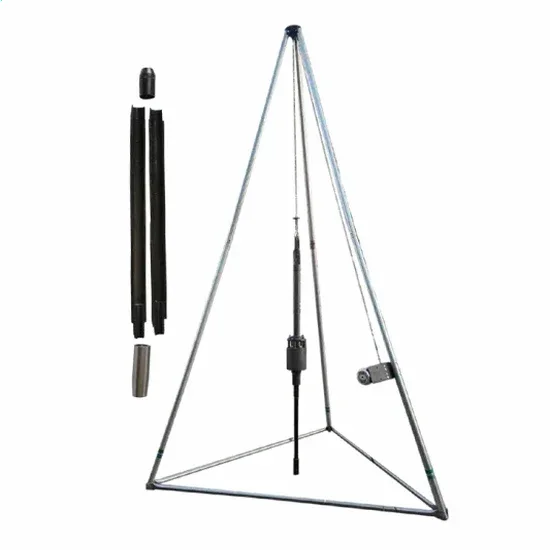
North Vancouver sits at the foot of the Coast Mountains, where bedrock lies shallow in some areas and glacial till deposits exceed 30 meters in others. The District's 2022 geological survey mapped over 47 hazardous slopes across the municipality, a reminder that subsurface conditions shift dramatically within a few hundred meters. For any structure with a building permit in this jurisdiction, understanding what lies beneath the topsoil is not just prudent—it is mandated by the BC Building Code. The Standard Penetration Test remains the most widely specified in-situ investigation method here, providing N-values that feed directly into the footings bearing capacity calculations required for seismic design. Our technical team runs an ASTM D1586-compliant SPT rig that operates efficiently on the steep, constrained lots common to Lynn Valley and the Upper Levels corridor.
An uncorrected N-value from a non-calibrated hammer can overestimate soil strength by 30%—in North Vancouver's variable till, that gap determines whether you spend an extra CA$60,000 on deep foundations.
Process and scope
We recently completed a site investigation off Montroyal Boulevard where a 5-storey mixed-use project was proposed on a lot with 18% grade and historic fill overlying Capilano Sediments. The drill crew advanced four boreholes to 15 meters, recovering split-spoon samples every 1.5 meters through dense silty sand that returned N-values jumping from 22 to refusal at the lodgement till interface. That kind of granular detail—not just the number, but the blow count curve and sampler recovery—is what a structural engineer needs to refine
retaining walls design and avoid over-excavation. Each test interval also logs groundwater strike, soil classification per the Unified Soil Classification System, and sample disturbance.
Where the site transitions toward the Mosquito Creek floodplain, we often pair SPT data with
grain size analysis to confirm liquefaction susceptibility under the NBCC 2020 seismic hazard values, which for North Vancouver reach a PGA of 0.46g on Site Class C. The rig uses a safety hammer with energy calibration to 60% theoretical free-fall energy, so raw N-values are corrected to N60 before any foundation parameter is derived.
Standards that apply
ASTM D1586-18 Standard Test Method for Standard Penetration Test (SPT) and Split-Barrel Sampling of Soils, NBCC 2020 Division B Part 4 – Structural Design (Seismic Provisions for Site Class Determination), CSA A23.3:19 Design of Concrete Structures (Foundations Section, referencing SPT-based bearing capacity), BC Building Code 2024 (Schedule C, Geotechnical Requirements), ASTM D2487-17 Practice for Classification of Soils for Engineering Purposes (Unified Soil Classification System)
Quick answers
How much does an SPT investigation cost for a single-family lot in North Vancouver?
For a typical single-family residential lot in the District, an SPT program with two boreholes to 10–12 meters depth, including mobilization, field logging, and a summary report with N60 values and preliminary bearing recommendations, runs between CA$770 and CA$990. Sites requiring traffic control on arterial roads, steep-slope rigging, or additional boreholes will fall toward the upper end or slightly beyond that range.
How many boreholes does the District of North Vancouver require for a building permit?
The District generally follows the BC Building Code requirement of at least one borehole per building footprint, with additional boreholes for structures exceeding 200 square meters or where site geology varies laterally. A geotechnical engineer of record determines the final number based on the proposed foundation system and the site's slope hazard classification, but two to three boreholes is the practical minimum for most medium-density projects we handle.
What is the difference between raw N-value and N60, and why does it matter for my foundation design?
The raw N-value is the blow count recorded by the drill rig's hammer without correcting for energy losses. In North America, the reference standard is 60% of theoretical free-fall energy, so N60 is the corrected value that allows consistent comparison across different hammer types and rigs. Our automatic safety hammer is calibrated to deliver 72% energy efficiency on average, meaning a raw N=20 converts to N60≈24. Using uncorrected values in bearing capacity formulas underestimates soil strength by 15–30%, potentially leading to an oversized and more expensive foundation.