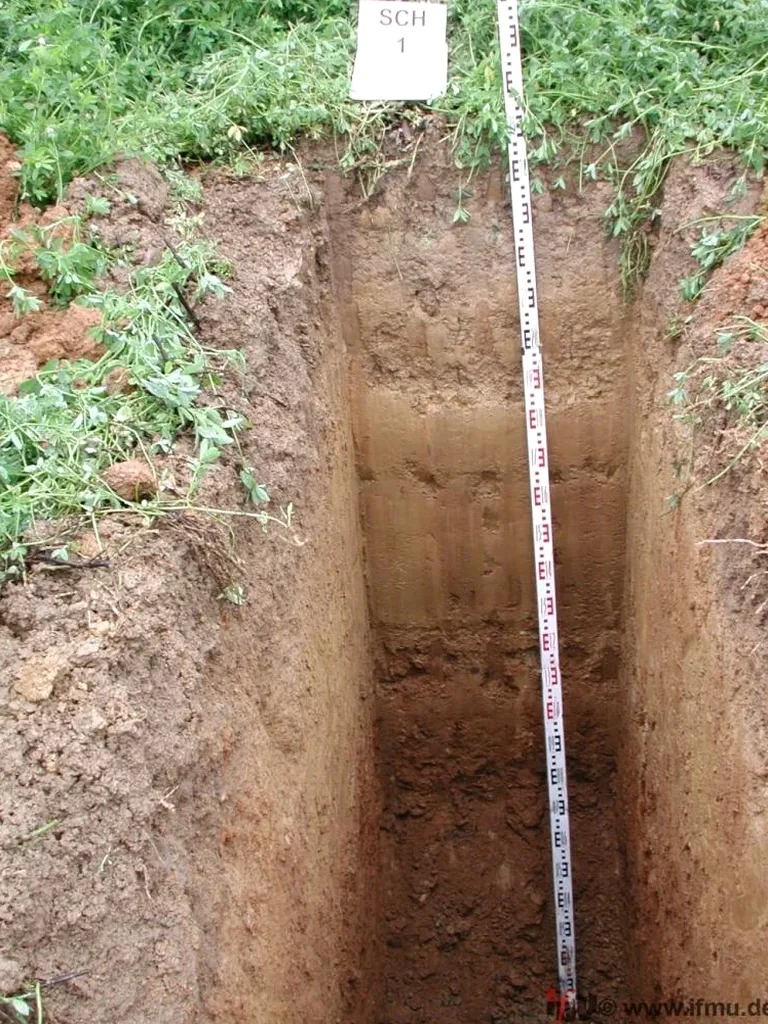
North Vancouver's transition from timber port to hillside residential hub has left a legacy of challenging terrain where cut-and-fill operations mask the original glacial stratigraphy. The District's mapping shows over 60 debris-flow creeks intersecting developed areas, making subsurface confirmation through exploratory test pits essential before any excavation or foundation pour. Our team works routinely in the Lynn Valley, Edgemont, and Deep Cove neighbourhoods, where a single test pit can reveal buried organics, perched groundwater, or uncompacted fill that desk studies miss. We log each pit to ASTM D2487 with photographic records and coordinate directly with District of North Vancouver permitting requirements for right-of-way access, ensuring the grain-size analysis lab data ties exactly to the exposed profile.
A well-documented test pit in North Vancouver's till can reveal seepage layers and buried organics that boreholes miss entirely.
Process and scope
The coastal rainforest climate of North Vancouver—averaging over 1,700 mm of precipitation annually—creates year-round saturation conditions that accelerate weathering of the Capilano sediments and Vashon till. Exploratory test pits in this environment require careful sidewall trimming to read undisturbed bedding, because smeared clay from the excavator bucket can mask slickensides or shear zones. Our logging protocol captures moisture content, consistency, colour mottling, and seepage rates at each stratigraphic break, using a Munsell chart under natural light. Depth capability typically ranges from 3.0 to 4.5 metres in till, though boulder-rich lodgement units near Mosquito Creek sometimes limit advance. We backfill with native material compacted in lifts, restoring surface drainage so that the site remains safe for subsequent survey or foundation crews working in North Vancouver's steep lot configurations.
Quick answers
What does an exploratory test pit cost in North Vancouver?
For a standard exploratory test pit in North Vancouver—including mini-excavator mobilization, excavation to 3.0–4.5 metres, full logging, photographic record, and lift-compacted backfill—the cost typically ranges between CA$630 and CA$1,080 per pit. The final figure depends on access constraints, boulder content, and whether District right-of-way permits are required. Sites on steep lots in areas like Upper Lonsdale or Deep Cove may require smaller equipment and additional hand-trimming time, which adjusts the rate accordingly.
How deep can you excavate a test pit in North Vancouver's till?
In the dense Vashon till typical of North Vancouver, we routinely reach 3.0 to 4.5 metres with a tracked mini-excavator. Depth is controlled by boulder frequency, groundwater inflow, and sidewall stability. In lodgement till near Mosquito Creek, large subrounded boulders can limit advance, while in ablation till the material excavates more readily but requires careful trimming to read the structure.
What information does a test pit provide that a borehole cannot?
A test pit exposes a continuous vertical face, allowing direct observation of bedding, fissures, slickensides, seepage layers, and the true thickness of fill or colluvium—features that can be missed or disturbed in split-spoon samples. It also permits bulk sampling for moisture-density testing and visual correlation with adjacent exposures, which is invaluable for slope-stability assessments in North Vancouver's dissected terrain.
Do you handle District of North Vancouver permits for test pits?
We coordinate the right-of-way permit process with the District of North Vancouver for any test pit located within the road allowance or on District-owned land. For private property, we confirm setback requirements and ensure WorksafeBC excavation safety protocols are followed. Our field crew arrives with traffic control and site protection already arranged, so the excavation proceeds without administrative delays.