← Home · Roadway

Flexible Pavement Design in North Vancouver: Performance Under Rain and Slope Loads

Together, we solve the challenges of tomorrow.

LEARN MORE →

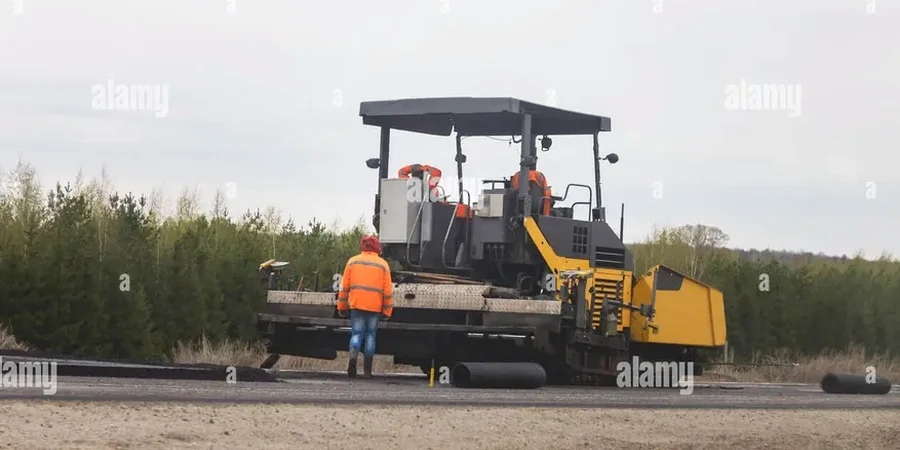
A double-drum vibratory roller moves across the compacted granular base on a North Vancouver site, while our field crew checks density with a nuclear gauge. Getting the asphalt and aggregate layers right here is not just about thickness. It is a direct response to the North Shore's relentless rainfall regime, where annual precipitation exceeds 2,400 mm. The pavement structure must shed water fast and resist the softening that saturates unbound layers. We design the cross-section from the subgrade up, specifying bitumen grade, air voids, and base course gradation for the specific drainage conditions of North Vancouver. Before finalizing the granular structure, we often run a plate load test on the formation to confirm the stiffness assumed in our model, avoiding overdesign or premature rutting. Our approach ties layer coefficients directly to the resilient modulus of the local glacial till, ensuring the pavement performs from the first heavy rain of October through to the spring thaw.

A flexible pavement in North Vancouver lives or dies by its drainage details, not just its structural number.

Process and scope

North Vancouver sits on a complex geological interface between the Coast Mountains and the Burrard Inlet, with bedrock depths varying from zero to over 15 meters across a single subdivision. This means the pavement subgrade can shift from weathered granodiorite to soft marine clay within less than 50 meters. Our design process starts by mapping these transitions using a seismic refraction survey to establish the rippability and stiffness profile along the alignment. We then tailor the pavement structure zone by zone, increasing the base thickness where the subgrade CBR drops below 5%. For the asphalt layers, we specify a polymer-modified binder (PG 70-28) to handle both the summer heat on exposed south-facing roads and the winter cold snaps. The structural number is calculated to carry the projected ESALs over a 20-year design life, with a reliability factor of 90% for arterial routes in the District of North Vancouver.
Flexible Pavement Design in North Vancouver: Performance Under Rain and Slope Loads
Technical reference image — North Vancouver

Local considerations

A common mistake in North Vancouver is using a standard Ministry of Transportation section without adjusting for the cut-and-fill transition zones typical of mountainside lots. When a contractor places a uniform pavement over a compacted fill that meets natural till at a steep grade change, differential settlement creates a transverse crack within the first year. Water then enters the base course, saturates the fines, and the pumping action under traffic quickly destroys the asphalt mat near the crack. We have seen this failure mode in the Blueridge and Lynnmour areas repeatedly. Our flexible pavement design explicitly models the cross-slope drainage and specifies a separation geotextile between the subgrade and the granular base in these transition zones. This prevents the migration of fines and maintains the structural coefficient of the base layer even during the sustained wet season in North Vancouver.

Need a geotechnical assessment?

Reply within 24h.

Email: info@geotechnicalengineering.vip

Technical data

ParameterTypical value
Design period (local roads)20 years
Design period (collectors/arterials)25 years
Minimum subgrade CBR3% (with geotextile separator)
Target subgrade CBR (post-treatment)8-12%
Asphalt binder grade (typical)PG 70-28
Base course thickness range150-300 mm (crushed aggregate)
Compaction standard (granular layers)100% Modified Proctor (ASTM D1557)

Complementary services

01

Subgrade Evaluation & CBR Testing

We perform laboratory and in-situ soaked CBR tests on North Vancouver's glacial till and fill materials to determine the design resilient modulus. We use the dynamic cone penetrometer for rapid verification across variable terrain.

02

Granular Base & Asphalt Layer Design

We calculate the Structural Number (SN) per AASHTO 93 methodology, adapted for BC conditions, specifying crushed aggregates with strict gradation envelopes and minimum fractured face counts to achieve the required layer coefficients.

03

Drainage & Subsurface Water Management

Design of the pavement cross-fall, subdrains, and daylighted base layers is critical in North Vancouver. We model the saturated hydraulic conductivity of the base course to ensure rapid lateral drainage away from the road prism.

04

Construction QA/QC & Nuclear Density Testing

Our technicians monitor the placement and compaction of each lift. We use nuclear density gauges and proof-rolling with a loaded truck to confirm that the finished formation and base layers will not rut under traffic.

Applicable standards

CSA A23.1/A23.2 (Concrete and Aggregates - referenced for base materials), ASTM D1557 (Modified Proctor for compaction control), BC MoTI Standard Specifications for Highway Construction (pavement sections adapted to municipal roads), TAC Pavement Design and Asset Management Guide

Frequently asked questions

How does the heavy rain in North Vancouver affect the design of a flexible pavement?

Rainfall exceeding 2,400 mm per year is the controlling factor. We design the pavement as a drained system: the cross-fall must be at least 2%, the base course must have less than 8% passing the #200 sieve to maintain permeability, and we often specify a separation geotextile to prevent subgrade fines from migrating into the clean base stone. The asphalt mix itself is designed with a low air-void content after compaction to resist moisture-induced stripping.

What is the typical pavement structure for a residential street in the District of North Vancouver?

A typical residential section, assuming a CBR of 5-8%, would be 50 mm of hot-mix asphalt over 200 mm of 19 mm minus crushed granular base. However, this varies significantly. In areas with softer marine clay near the Lower Capilano, we often increase the base to 300 mm and add a geogrid reinforcement layer. Each design must be confirmed with a site-specific subgrade investigation.

What is the price range for a flexible pavement design for a standard North Vancouver lot?

For a complete design package including subgrade investigation, drainage analysis, and pavement layer specification for a typical single-family lot or small subdivision, the fee ranges from CA$2,590 to CA$7,700. The final cost depends on the length of access road, the complexity of the terrain, and the number of cut-and-fill transitions we need to model.

Which asphalt binder grade do you recommend for North Vancouver?

We typically specify a PG 70-28 polymer-modified binder. The upper limit of 70°C accounts for summer pavement temperatures on sun-exposed roads, while the lower limit of -28°C covers the low-temperature cracking risk during winter cold snaps. This grade outperforms the older PG 64-22 in resisting both rutting and thermal cracking in the North Shore's climate.
Location and service area

We serve projects in North Vancouver and surrounding areas.

View larger map