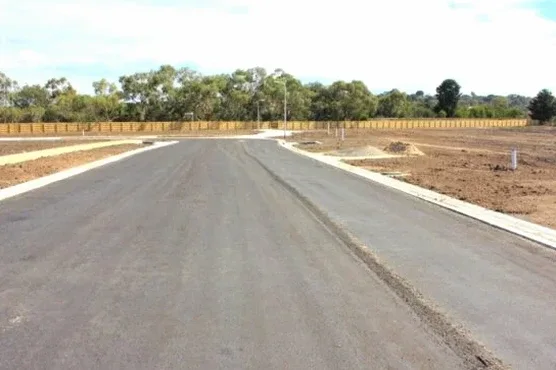
North Vancouver sits at the base of the Coast Mountains, where annual precipitation can exceed 2,500 millimetres on the upper slopes. That relentless moisture, combined with freeze-thaw cycles from sea level up to the Cypress plateau, puts extraordinary stress on concrete pavements. Our team sees the same pattern year after year: slabs that curl at the joints because the top surface cools faster than the base, then crack when heavy trucks roll across the unsupported edge. A rigid pavement design that works in the Lower Mainland has to account for steeper crossfalls, saturated subgrades, and the fact that much of the District rests on Pleistocene glacial till with scattered boulders. For bus-loop slabs near Lonsdale Quay or container-handling pads in Maplewood, we model load transfer at joints using plate load testing to confirm that the foundation stiffness matches the assumption built into the thickness calculation.
A rigid pavement on the North Shore fails most often at the joint, not in the slab centre, because water and frost attack the subbase from the edge inward.
Process and scope
North Vancouver’s road network grew out of early-20th-century streetcar suburbs, then expanded up the cutblocks of the Grouse and Seymour watersheds. That history left a patchwork of fill sections and shallow bedrock that still dictates how a concrete pavement performs. We rely on the Portland Cement Association thickness design method, supplemented by Canadian Standards Association CSA A23.1/A23.2 for concrete materials and CSA A23.3 for structural design, to size slabs that resist fatigue from repeated axle loads. In practice, the biggest variable is the modulus of subgrade reaction, which we often refine through
in-situ permeability testing when the formation level sits in silty till that drains poorly. For industrial pavements where forklifts impose concentrated loads, we tie the slab geometry to the results of a
CBR road assessment, making sure the granular subbase thickness compensates for the wet, fine-grained soils that are common east of the Capilano River. Joint detailing—contraction spacing, dowel diameter, and sealant type—gets customised for each site because the temperature swing between a January morning at the waterfront and an August afternoon on Mount Seymour Parkway can exceed 30 degrees Celsius.
Regional considerations
The contrast between the damp marine air along Burrard Inlet and the subalpine climate only 1,000 metres higher creates a pavement environment where water is the constant enemy. Curling stress, pumping at joints, and freeze-thaw scaling are the three distress types we most often investigate on North Vancouver rigid pavements. When a truck lane or a loading dock shows early cracking, the root cause is almost always poor drainage at the slab edge, not insufficient concrete thickness. Our team maps the drainage path before recommending a fix, and in many cases we combine the pavement investigation with a slope stability review because so many North Shore sites sit on terraced cuts where surface water migrating under the pavement can trigger slumping in the fill below. A concrete pavement on a hillside is a hydraulic structure as much as a structural one, and the design has to reflect that.
Quick answers
What does rigid pavement design cost for a typical North Vancouver project?
For a standalone design package covering slab thickness, joint layout, and subbase specification, the fee generally falls between CA$2,750 and CA$7,420 depending on the paved area, traffic loading class, and whether subgrade testing is included. Heavy industrial yards with channelised forklift traffic sit at the upper end because the load-transfer analysis is more detailed.
How does the North Shore’s rainfall affect concrete pavement performance?
High rainfall accelerates subgrade saturation, which softens the support under the slab edges and increases the risk of pumping at the joints. We specify a free-draining granular subbase with a positive crossfall and edge drains to keep the formation as dry as possible, and we often increase the dowel diameter slightly to handle the reduced k-value during wet months.
Can a rigid pavement be designed for a steep North Vancouver driveway?
Yes, but it requires careful attention to surface texture and joint orientation. On grades above 8 percent, we specify a broom finish for skid resistance and align the contraction joints perpendicular to the slope so they do not act as channels for runoff. The slab thickness may also need to be increased to handle braking forces from heavy vehicles.