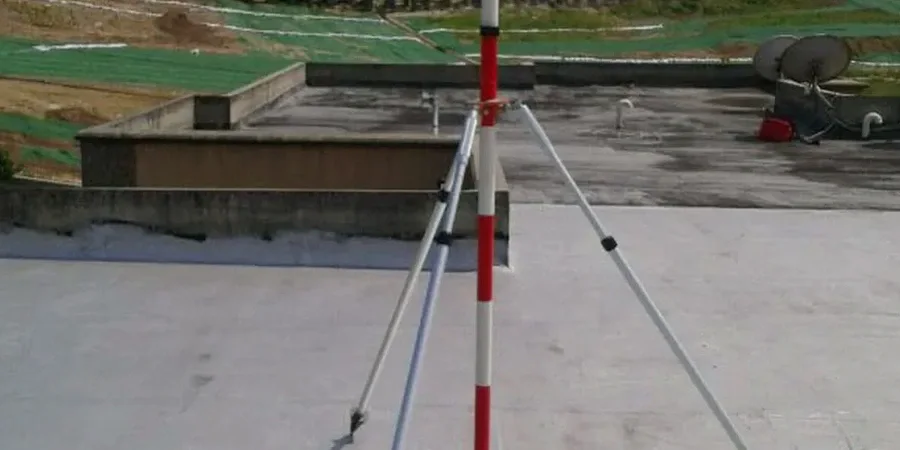
On the North Shore, you learn fast that glacial till can change from dense to loose in under ten meters. We've seen it on Lonsdale, on Marine Drive, and up in Lynn Valley. That's why we don't guess. We monitor. Every deep cut in North Vancouver needs a geotechnical excavation monitoring plan that tracks real movement as it happens. Not a report two weeks late. Live data from inclinometers, piezometers, and survey markers. The till here is overconsolidated from past ice loading, but the pockets of glaciomarine silt can surprise you. We feed readings directly to the site team. If a shoring wall moves 3 mm overnight, you know before the morning huddle. This is how we keep excavations in North Vancouver predictable, even when the ground isn't.
If you don't know what the till is doing at 5 m depth, you're not managing risk. You're just digging.
Quick answers
What instruments do you use for monitoring a 10 m deep excavation in North Vancouver till?
We use in-place inclinometer strings installed behind the shoring wall, vibrating wire piezometers at two depths to track pore pressure, and optical survey settlement markers on a 5 m grid. All instruments are read daily during active excavation. Data goes to a web dashboard the same day.
How much does geotechnical excavation monitoring cost in North Vancouver?
Monitoring costs range from CA$1,310 for a basic trigger-based setup on a small cut, up to CA$3,350 for a full continuous monitoring suite on a deep excavation with automated logging. The price depends on the number of instruments, reading frequency, and project duration.
How fast can you deploy instruments when excavation has already started?
We can mobilize within 24 hours in North Vancouver. Inclinometer casings and piezometers get installed in pre-drilled boreholes behind the face. Settlement markers can go in the same day. We start delivering readings within 48 hours of arrival on site.