← Home · Underground Excavations

Geotechnical Design of Deep Excavations in North Vancouver

Together, we solve the challenges of tomorrow.

LEARN MORE →

A 20-meter deep excavation off Lonsdale Avenue hit running sand at 12 meters. The contractor had water flowing into the pit within hours. That job taught us a hard lesson about North Vancouver’s glacial geology. You cannot guess the ground model here. The advance and outwash deposits sitting on till create abrupt transitions from dense gravel to loose sand. We design shoring and dewatering systems that hold these transitions. Our approach starts with a tight stratigraphic model. Then we run staged excavation analysis to size walers, struts, and tied-back walls. For projects near creeks or the Burrard Inlet shoreline we add seepage modeling. The water table in Lower Lonsdale sits high year-round. Combine that with seismic demands from the NBCC and you get a design problem that demands both local data and rigorous analysis. We often integrate CPT testing to map thin silt seams that conventional boreholes miss, and we pair it with slope stability checks when the excavation backcut approaches an adjacent building.

In North Vancouver’s glacial sequences, the difference between a dry excavation and a flooded pit is a single silt seam you did not model.

Process and scope

North Vancouver’s development through the 1960s and 1970s placed low-rise buildings on shallow footings across the coastal bench. Today’s high-density projects excavate deep into the Capilano and Seymour sediments right next to those older structures. Vibration and deflection limits become the controlling design parameters. We design soldier pile and lagging walls, secant pile walls, and diaphragm walls depending on the clearance to adjacent footings. A typical excavation on Marine Drive with 3 meters of clearance to a 1960s apartment block will require a secant wall and double-level tiebacks. We model staged excavation with PLAXIS or FLAC to keep lateral movements under 10 mm. When the excavation extends below the water table we design deep wells or eductor systems. The glacial till in North Vancouver has a permeability low enough that sump pumping alone will not cut it once you hit the advance deposits. In these conditions we specify a grouting program ahead of the cut to seal the interface between till and the overlying sand. This reduces inflow and stabilizes the face before shoring goes in.
Geotechnical Design of Deep Excavations in North Vancouver
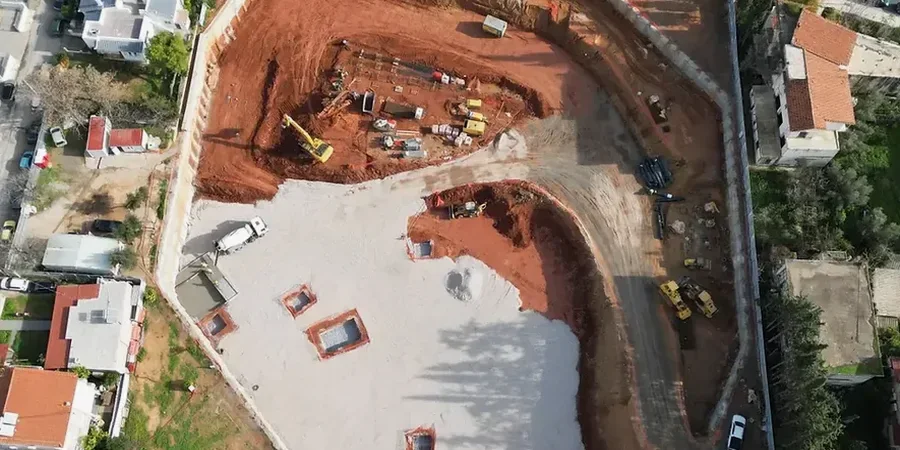
Technical reference image — North Vancouver

Local considerations

The NBCC 2020 seismic hazard for North Vancouver demands a site-specific ground motion analysis for deep excavations classified as post-disaster or high importance. The glacial till here amplifies short-period motion. A conventional 1D SHAKE analysis can underestimate surface acceleration by 15-20 percent if you do not calibrate the modulus reduction curves to local shear wave velocity data. We run MASW and downhole surveys to build the Vs profile, then feed it into a 2D site response model. The other risk nobody talks about is buried creek channels. North Vancouver has at least four historic watercourses now running through culverts under paved streets. A deep excavation intercepting an old channel can collapse a shoring wall in minutes. We cross-reference historical maps, LIDAR, and CPT data to flag these hazards before a single pile is drilled. The cost of ignoring them is a failed wall and a flooded street. We have seen it. We design to avoid it. And we document every assumption so the contractor knows where the red lines are.

Need a geotechnical assessment?

Reply within 24h.

Email: info@geotechnicalengineering.vip

Technical data

ParameterTypical value
Maximum excavation depth designedUp to 28 m in urban lots
Lateral deflection limit at adjacent footings≤ 10 mm for sensitive structures
Shoring system typesSoldier pile, secant pile, diaphragm wall
Groundwater control methodsDeep wells, eductors, grout curtains
Seismic design standardNBCC 2020, Site Class C/D per CSA
Analysis methodFEM staged excavation (PLAXIS / FLAC)
Typical tieback capacity range300 kN to 1,200 kN per strand anchor

Complementary services

01

Shoring and Retention System Design

Full structural design of soldier pile, secant pile, and diaphragm walls including tieback anchors, internal bracing, and waler systems. We deliver staged excavation drawings with deflection predictions at each level.

02

Dewatering and Groundwater Control

Hydrogeologic modeling and dewatering system design using deep wells, wellpoints, or eductors. We design cut-off walls and grout curtains where drawdown outside the excavation must be minimized to protect adjacent foundations.

Applicable standards

NBCC 2020 (National Building Code of Canada), CSA A23.3 (Design of Concrete Structures), CSA S6:19 (Canadian Highway Bridge Design Code), ASTM D2487 (Unified Soil Classification System), ASTM D1586 (Standard Penetration Test)

Frequently asked questions

What is the typical cost range for geotechnical design of a deep excavation in North Vancouver?

Design fees for a deep excavation in North Vancouver typically range from CA$2,720 to CA$11,480 depending on excavation depth, shoring complexity, and the number of retained stages. A 10-meter excavation with a single-tier tieback system sits at the lower end. A 25-meter excavation requiring a secant wall, multiple tieback levels, and groundwater cutoff falls at the upper end. We provide a fixed-fee proposal after reviewing the structural drawings and geotechnical baseline report.

How do you handle an excavation next to a 1960s building on shallow footings?

We set a lateral deflection limit of 10 mm at the adjacent footing and design the shoring system to meet it. This usually means a stiffer wall type, like a secant pile wall instead of soldier piles. We model each excavation stage in PLAXIS and specify preloaded tiebacks to control movement from the first cut. If the building has no foundation drawings, we do a partial exposure or a test pit to confirm footing depth and condition before finalizing the design.

What seismic requirements apply to deep excavations in North Vancouver?

The NBCC 2020 governs seismic design. For excavations classified as post-disaster or high importance, we run a site-specific seismic hazard analysis. North Vancouver’s glacial soils amplify short-period shaking, so we use MASW and downhole shear wave velocity data to build a calibrated site response model. The shoring wall and anchors are designed for the amplified ground motions. Post-earthquake serviceability checks are included when the excavation must remain open for months.

How do you deal with groundwater during excavation in North Vancouver?

The water table in much of North Vancouver sits within 3 to 5 meters of the surface. Once the excavation goes below that, passive sump pumping is rarely enough. We design deep well systems or eductors depending on the permeability of the soils at the site. Where drawdown outside the excavation could cause settlement of adjacent buildings, we design a grout curtain or a secant pile cutoff wall to isolate the excavation hydraulically. The design includes contingency triggers in case inflow exceeds predicted rates.
Location and service area

We serve projects in North Vancouver and surrounding areas.

View larger map