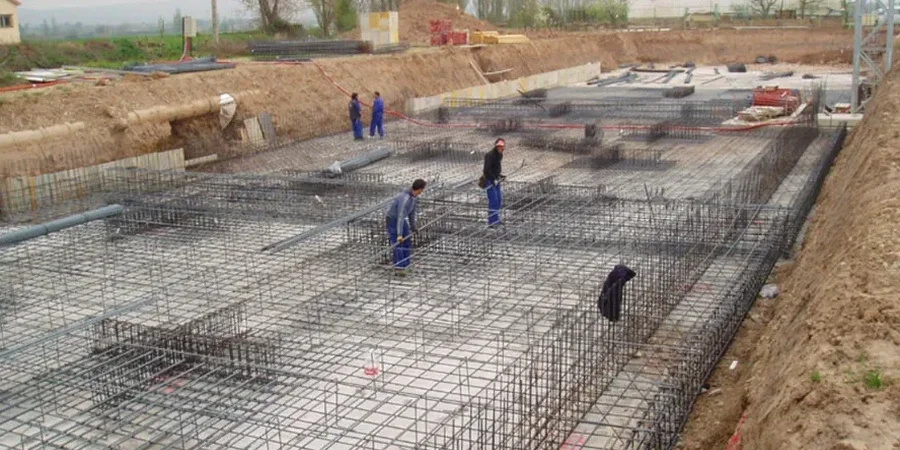
One of the most persistent problems we see on the North Shore happens when designers import generic presumptive bearing values from the Vancouver Building Bylaw without accounting for North Vancouver's highly variable overburden. You might have a competent lodgement till at three feet on one side of Lonsdale and ten feet of compressible marine silty clay on the other, a transition that catches flatwork and lightly loaded strip footings off guard every season. The result is differential settlement that cracks partition walls and binds doors long before occupancy. Our lab approaches every shallow foundation design assignment by first reconstructing the depositional history beneath the building footprint: we correlate in-situ penetration data from SPT drilling with laboratory index testing to distinguish true till from glaciolacustrine deposits, and we run consolidation curves on undisturbed Shelby tube samples when the clay fraction exceeds fifteen percent. That upfront stratigraphic effort eliminates the guesswork that causes so many North Vancouver foundation callbacks.
North Vancouver's glacial stratigraphy can change bearing behaviour within a single lot—generic presumptive values are the most expensive shortcut on the North Shore.
Quick answers
What is the typical allowable bearing pressure for shallow foundations in North Vancouver?
There is no single number that works across North Vancouver. On dense lodgement till in the upper Lonsdale corridor we often see serviceability-limited values in the 200 to 300 kPa range, but in the lower Capilano floodplain or Lynn Valley where soft glaciomarine clay is present within the influence zone, the allowable pressure can drop below 100 kPa to keep total settlement under 25 mm. Every site needs its own investigation because the till surface depth and the clay sensitivity can shift over very short distances. We determine the final value from a combination of SPT N60, laboratory shear strength, and consolidation testing, not from a generic table.
How much does a shallow foundation design investigation cost for a single-family home?
For a typical single-family lot in North Vancouver, a complete shallow foundation investigation including hollow-stem auger drilling, SPT testing, laboratory classification, consolidation, and direct shear, plus a signed bearing capacity report, runs between CA$2,780 and CA$3,960. The final cost depends on access conditions, the number of boreholes required, and whether undisturbed sampling for consolidation testing is needed.
How do you account for the seismic requirements in the North Vancouver area?
North Vancouver's short-period spectral acceleration is among the highest in the Lower Mainland, so we evaluate the seismic bearing capacity reduction per the CFEM method that accounts for cyclic degradation of undrained shear strength. We use the NBCC 2020 hazard values for the site coordinates and apply a strength reduction factor to the static bearing capacity based on the expected cyclic strain level. For sensitive clays, we run cyclic triaxial tests to confirm the degradation threshold rather than relying on empirical correlations.
How many boreholes do you need for a shallow foundation design?
For a standard residential or small commercial building in North Vancouver, we aim for a minimum of two boreholes placed at opposite corners of the proposed footprint, with a third added if the till surface depth varies by more than one metre between the first two. The NBCC and CFEM guidance on investigation density is tied to the variability of the subsurface, and North Vancouver's glacial terrain often warrants tighter spacing than a flat delta site would require.
What is the difference between a shallow foundation and a deep foundation for North Shore conditions?
A shallow foundation transfers building loads to the ground within a depth roughly equal to its width, typically on till or dense outwash within two to three metres of the surface. On the North Shore, we generally recommend shallow footings where competent till is accessible at reasonable depth. A deep foundation, such as driven piles or drilled shafts, becomes necessary when the till is deeper than about four metres, the clay is too compressible for settlement control, or the liquefaction risk in loose saturated sand layers requires bearing below the susceptible zone. The decision hinges on the stratigraphy logged during the investigation, not on a predetermined preference.